MVP for Proof of Care Whitepaper
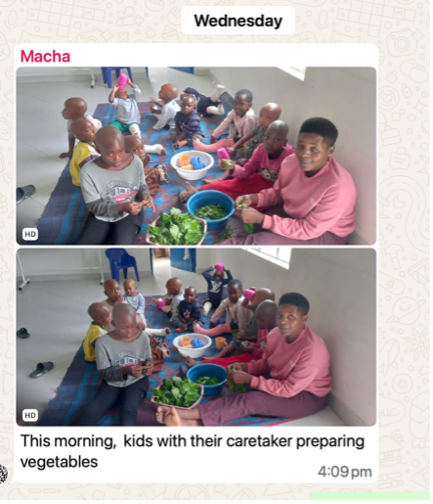
Dear Louis/Zhexin,
Firstly, thank you not just for your recent offer to help, but for your support over the past several years. You are the only person I can speak to at a technical level about what is trying to be achieved here and more importantly, what is possible.
This note is both personal and purposeful.
I’ll start with the personal.
I am deeply committed to this work. At the moment, somewhere between 20–40% of my income is directed into operations across Africa. I still have responsibilities at home, three children, but I am actively restructuring my life, including selling my house, to reduce my own financial needs so that more capital can be directed toward this mission. I have done things like this all my life. This is not a momentary diversion and I have been since 2015 specifically on this project.
We are now:
- Operating in Uganda (just over a year)
- At 15 operations in Ethiopia
- Working across 6 to 10 hospitals in Tanzania at any given time
- Expanding groundwork into South Sudan
- Beginning groundwork in Nepal
In total, we’ve now completed over 1,400 child surgeries.
Every one of these is documented publicly on google sheets and can be seen via morechildsurgeries.com
But what we are trying to build is far bigger than operations.
The Vision
Biggest picture goal is to allow/encourage giving from one to another in a way that best repeats for that is the power of humans.
An interim goal is simple to state, but difficult to execute:
1,000 children operated on in 1,000 hospitals for under $1,000 per child.
Not just as an outcome, as a system.
Because I fundamentally believe:
- Healthcare → leads to education
- Education → leads to economic stability
- Stability → leads to less conflict and better global outcomes
We’ve seen this pattern already across Asia and parts of Africa. When child survival increases, trust increases. When trust increases, birth rates stabilise, and societies strengthen, when societies strengthen then things like climate, wars, poverty can be better addressed.

The Problem
Specifically child surgeries (as the example) the current system of giving is
- Fragmented
- Costly (especially between countries via exchange and red tape)
- Open to Fraud
- Invisible
We have:
- Donors
- Outreach workers
- Medical providers
- Intermediaries
But there is no clean, trustless connector between them.
Instead:
- Trust is centralised
- Systems are opaque
- Fraud risk increases with scale
- Costs expand without proportional outcomes
- And mistrust, inertia and inaction dominate more than they could/should

The Idea: Proof of Care
What I am trying to design is a system analogous to Bitcoin, but for human outcomes and a store of love rather than financial outcomes and a store of wealth.
A Proof of Care system.
Where:
- A donor can connect directly to a child
- A child progresses through verifiable stages
- Funds are committed, but only released upon delivery
- No central authority controls the system – but all actors are “labelled” through ratings, outcomes, registration etc
- Trust emerges from transparency, not branding
Core Principles
- Open Source and Unowned
The system must not belong to anyone, organisation, or government.
It must be:
- Open source
- Neutral
- Globally accessible
Like Bitcoin, its strength is precisely that it is not owned.
- Transparency
Every step must be visible (child surgeries is the example):
- Child and individual need identified
- Diagnosis confirmed
- Surgery completed
- Follow-up verified
No branding overlays. Just reality.
- Conditional Funding (Promise to Pay) – the major difference between now and the future in mass giving
Funds are not given upfront.
They are:
- Committed by donors
- Locked against a case
- Released only when verifiable milestones are met
This creates alignment between:
- Outcome – meaning verified review
- Incentive
- Trust
- Connected Evidence (The “Hash Chain” Concept)
Each stage must prove the previous one existed.
Not through trust, but through structure.
Outreach → Diagnosis → Surgery → Recovery
Each step:
- References the previous
- Locks it in
- Prevents silent alteration
- With payment now dependent on future performance – forcing all actors to “know” the system and outcomes
This is the closest analogue to blockchain in this system.

Participants like a coin must be:
- Registered
- Trackable
- Reviewable
Not perfect, but progressively trustworthy.
Reputation becomes earned through:
- Outcomes
- Cost efficiency
- Consistency
- Market-Based Efficiency (Auction Logic)
Costs should not inflate over time. Similarly they need to incentive enough for someone to take on.
Instead:
- Providers compete
- Efficiency is rewarded
- Outcomes per dollar become the key metric
The system must reward:
Doing more good, at lower cost, not presenting it better.
Outcome not presentation and of course completed and verifiable against goal.

Like mining or validation:
There should be actors whose role is to:
- Detect fraud
- Challenge inconsistencies
- Verify claims
And be rewarded for doing so.
- Protection of the End Beneficiary
The child (or recipient) must remain central.
The system must maximise:
- Safety
- Outcome quality
- Continuity of care
This is not just about transactions it is about human results.
- But there must also be protection and benefit to all involved including and especially the funder which could be a mum and dad donor but this could also be a system for foreign aid funding.

Louis, the reason I am writing to you directly is simple.
You understand both:
- The technical architecture required
- The philosophical importance of decentralised trust
This is not just an app.
It is not just a database.
It is the early thinking toward a global coordination layer for human care.
Where This Goes
Today: child surgeries
Tomorrow:
- Flood response
- War displacement
- Homelessness
- Any human need that can be individually verified
But always with the same rule:
No aid without a clear, verifiable path from need → outcome.
Final Thought
Bitcoin proved that: Trust can exist without a central authority.
What I believe we can build is: Proof that care can scale without losing integrity.
If this resonates with you, I would value your involvement – not just as a contributor, but as a co-creator in shaping this properly from the ground up.
Warm regards,
Mal
proofofcare.org
morechildsurgeries.com
WhatsApp +61457844711
MVP we are building now off Google Sheets
Google Sheets Current Method
Response and beginning of MVP build
Mal, I’ve read through the whole document carefully and I really appreciate the depth of thinking here.
One thing I want to be upfront about though. I’d steer away from the idea of creating a new token or currency similar to Bitcoin. Issuing a token is actually the easy part — anyone can do that in minutes. The hard part is making it actually work — getting people to use it, maintaining its value, building liquidity, creating real utility, governance, and so on. There are so many moving pieces involved that it would pull focus away from what really matters: helping children.
The good news is — we don’t need to build any of that. Everything you described in your document can be achieved using infrastructure that already exists today:
• Stablecoins like USDC for donations — stable value, globally accessible, transparent on-chain
• Smart contracts on existing blockchains to lock funds and release them milestone by milestone — diagnosis, surgery, recovery
• Existing wallet infrastructure so donors and providers can interact without needing to understand crypto
The blockchain does the heavy lifting in the background — tamper-proof records, conditional fund release, full transparency — but no one needs to buy or trade a new coin. Donors send stablecoins, the smart contract holds and releases them based on verified outcomes.
By the way, I’ve already shared your letter with my friend at UNICEF. I’ve got a few things to take care of on my company’s side first, but once things settle down a bit I’ll push this forward and get that call set up for us.